Think back to the last time you moved to a brand-new city or started a high-stakes job. Remember that first night in an empty apartment, surrounded by boxes, listening to every unfamiliar creak of the floorboards? You probably didn’t wake up the next morning feeling like the “real you.” You were likely exhausted, a little anxious, and hyper-aware of everything around you. It took a few weeks to find the grocery store without a GPS, and maybe three months before that new city finally started to feel like home.
At Bogey’s Buddies, we see this exact same process play out every single time we bring a dog into our rescue or place one in a new home. In the rescue world, we call this the 3-3-3 Rule. It’s a roadmap for the first three days, three weeks, and three months of a dog’s transition.
But here’s the most important thing we tell our fosters and adopters: The 3-3-3 Rule is a guideline, not a guarantee. Every dog is a unique individual with their own history, and just like humans, some of us take a little longer to unpack our emotional baggage than others.
Phase 1: The First 3 Days (Decompressing)
The first 72 hours are all about decompression. For a dog coming from a high-stress environment — like a crowded animal control facility or a neglectful situation — your home is a sensory overload. New smells, new voices, new floors.
During these first three days, a dog might:
- Feel overwhelmed and shut down.
- Refuse to eat or drink.
- Sleep for hours on end as they finally feel safe enough to rest.
- Hide under a table or stay strictly in their crate.
Take our sweet Delilah, for example. Delilah is a survivor in every sense of the word, but when she first arrived, the world was a terrifying place. She didn’t just “settle in” over a few days: she barely left her bed for the first 5 weeks. She was curled into a tiny ball of uncertainty, watching us from a distance. She wasn’t being “stubborn”; she was processing.
It took until Week 5 for us to hear the first tiny, quiet yip: a small sign that there was a voice inside that scared exterior. After that, the progression continued. In Week 6, she started walking halfway toward us, her tail giving a hesitant wag. It wasn’t until Week 7 that she felt brave enough to approach, sniff a hand, and finally allow a gentle pet. For Delilah, those first several weeks were a massive internal mountain to climb, and that’s exactly why we remind people that the 3-3-3 rule is just a guideline. Every dog is different, and some need far more time than others to feel safe.
Phase 2: The First 3 Weeks (The Personality Emerges)
Once a dog realizes they aren’t leaving tomorrow, they start to settle into the routine. This is when the “honeymoon phase” usually ends and their true personality starts to peek through. They learn when breakfast is served, where the “good” toys are kept, and who gives the best belly rubs.
This is also when you might see some testing of boundaries. Just like a teenager testing house rules, a rescue dog might start to see what they can get away with now that they feel comfortable.
Contrast Delilah’s quiet journey with Marra. Marra is a spunky Chihuahua mix who came from a difficult hoarding case. She had been through it all: escaping a kennel, surviving in the woods, and having very little positive contact with humans. But Marra’s happy dance emerged much faster, showing just how wide the range of adjustment timelines can be. Once she hit that three-week mark, she didn’t just settle in; she took over!
Marra became famous in our rescue for her “happy dance.” When she’s excited, she doesn’t just wag her tail: she does full-speed laps around the couch, a blur of joy and fur. Marra’s outgoing spirit actually helped Delilah find her own confidence. Seeing Marra trust us gave Delilah the “social permission” to do the same. This is why we love the community aspect of rescue: dogs helping dogs heal.
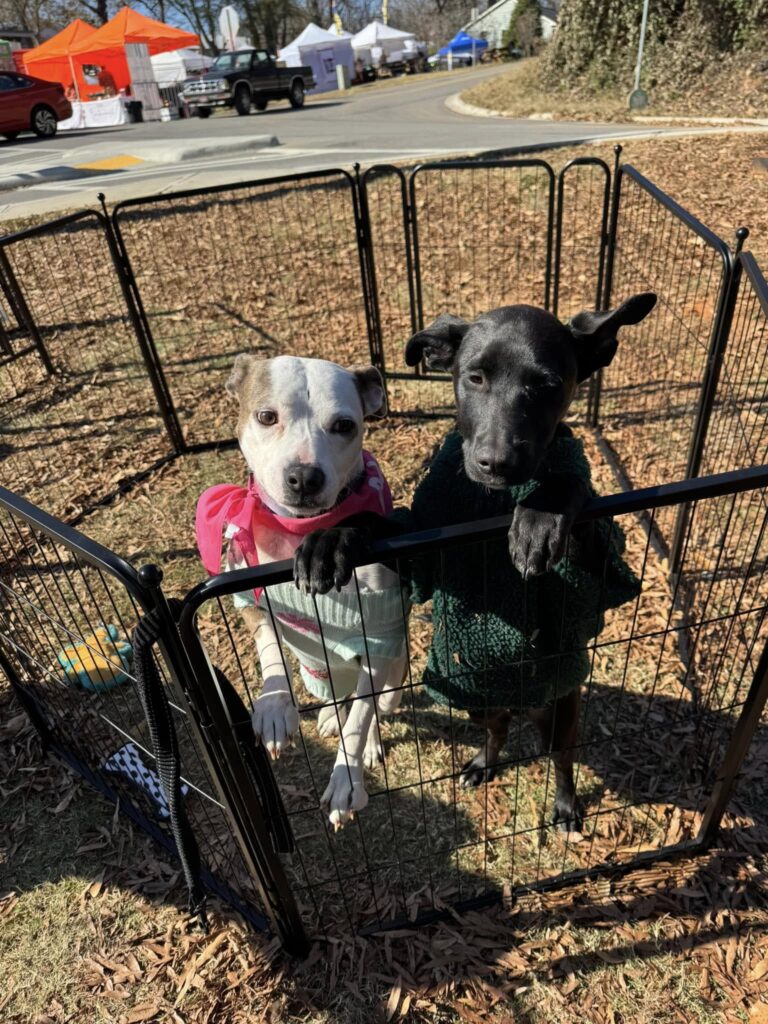
Phase 3: The First 3 Months (Building the Bond)
By the three-month mark, most dogs have a complete sense of security. They aren’t just “staying” with you anymore; they are part of the family. The bond of trust is solidified, and you can finally see the long-term potential of the relationship.
In Bartow County, we deal with many dogs who have never known a stable home. For them, three months is often the first time in their lives they’ve had ninety consecutive days of safety. That kind of stability is transformative. It’s when the fear in their eyes completely disappears, replaced by a steady, loving gaze.
The Foster Perspective: Making Space for the Next One
None of these transformations would be possible without our incredible network of fosters, like Holly and Mike. Fostering is the heartbeat of what we do at Bogey’s Buddies.
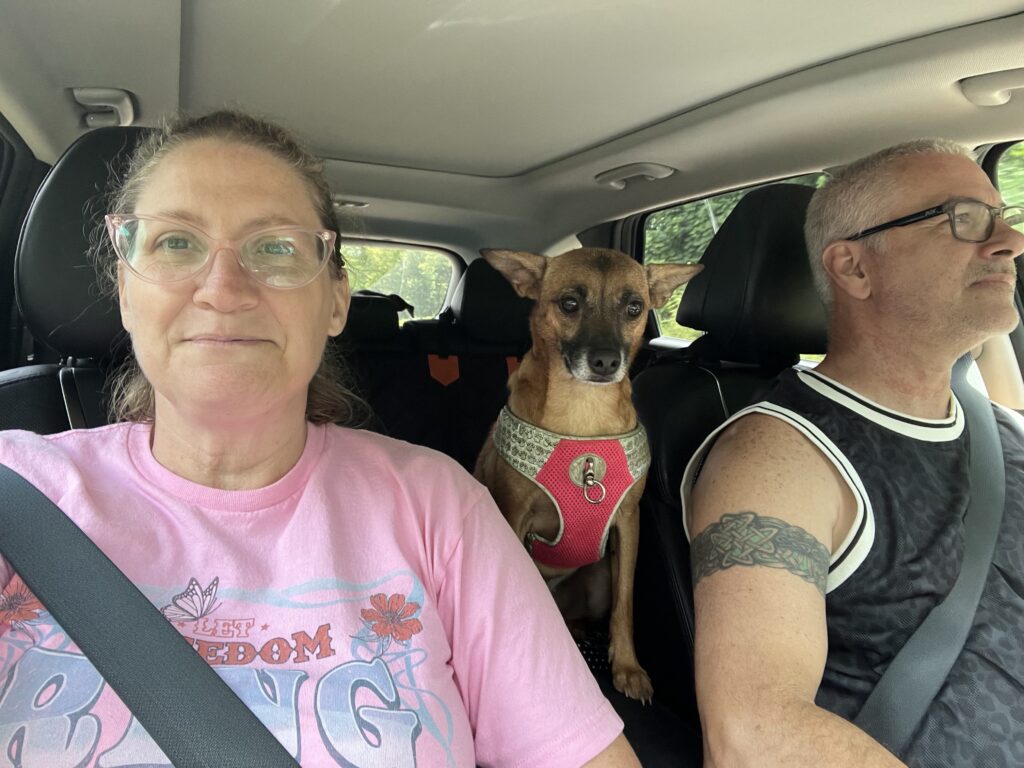
Holly and Mike have seen the 3-3-3 rule play out dozens of times. They’ve welcomed mamas with puppies, shy seniors, and energetic youngsters into their home. People often ask them, “How do you let them go?”
The truth is, it’s emotional. There are always tears when a foster dog heads to their forever home. But as Holly and Mike often say, letting one go is the only way to make space for the next dog sitting in a cold crate at Animal Control who desperately needs a chance to decompress. When you foster, you aren’t just giving a dog a bed; you’re giving them the time they need to follow their own 3-3-3 timeline.
[Insert image: https://cdn.marblism.com/iVTSI5MbfnH.webp]
How You Can Support the Journey
At Bogey’s Buddies (officially Bartow Rescue & Resources), we are a 501(c)(3) nonprofit dedicated to more than just “finding homes.” We want to keep families together and provide the resources — like financial assistance and guidance — to ensure that every pet in Bartow County has a fighting chance.
Adjusting to a new life is hard work for a dog, and keeping our rescue running is hard work for us. We rely entirely on the support of our community: donors, philanthropists, and local heroes who believe that every Delilah and Marra deserves a happy ending.
Here is how you can help today:
- Donate: Your contributions through our Givebutter campaigns go directly toward veterinary care, rehabilitation, and the resources needed to support families in crisis.
- Foster: If you have a spare room and a little patience, you can be the bridge between a dog’s past and their future.
- Adopt: Look at our adoptable pets and see if your home is ready for a new best friend.
- Spread the Word: Share this post on LinkedIn! Awareness is just as valuable as funding.
Every dog is different. Some will dance around the couch on day one, and some will need three months just to feel safe enough to bark. But with patience, love, and the support of our Bartow County community, we can make sure every dog gets exactly as much time as they need.
Together, we’re building a more compassionate future for the pets and people of North Georgia. Thank you for being a part of our pack.